

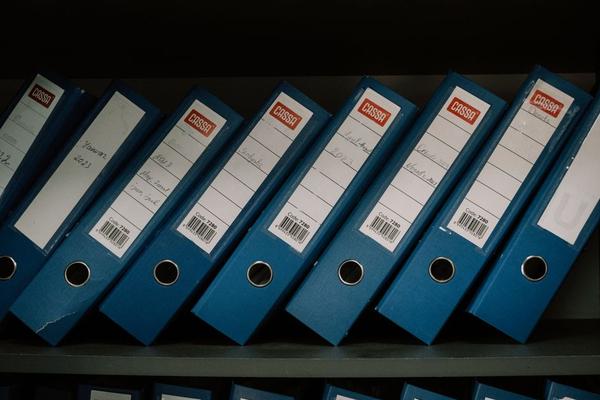
A customer asks for last spring’s invoice. Your supplier needs the signed agreement, and your accountant wants proof of a payment. If each request sends you searching through email, a desk drawer and several cloud folders, the problem is the absence of a reliable way to find paperwork.
A small business record keeping system should answer three questions quickly: what happened, where is the evidence, and who is responsible for it? You need sensible categories, consistent habits and a plan for keeping information safe.
Begin with the records you actually use
Before creating folders, list the information your business produces. Think about what you check during a normal week and what might be requested months later. Start with these broad groups:
Sales: quotations, customer orders, invoices, receipts and payment confirmations.
Purchases: supplier bills, expense receipts, purchase orders and contracts.
Finance: bank statements, transaction summaries, tax documents and reconciliations.
Operations: insurance policies, licences, equipment records and important correspondence.
People: employment documents, payroll records and contractor agreements, where applicable.
Some businesses need additional categories, such as stock movements, client consent records or maintenance logs. Keep confidential information separate, with appropriate access controls. The aim is not to save everything indiscriminately; it is to capture records that explain decisions, transactions and obligations.
Design folders around how you retrieve information
Good document organization is built for future searches, not just today’s filing. Use a few top-level folders with predictable subfolders. For example, Finance might contain Banking, Sales Invoices, Supplier Expenses and Tax, followed by a year inside each category.
Choose one naming convention and apply it consistently. A file named 2026-04-18_SupplierName_Invoice-1048.pdf is easier to identify than scan007.pdf or final-new-2.pdf. For contracts, include the other party and agreement date; for revised documents, add a version number or approval status.
Do not build so many nested folders that staff must guess where a document belongs. Imagine retrieving an unpaid invoice, insurance renewal or warranty claim. If the route is not obvious, simplify it.
Create one intake point for incoming paperwork
A system fails when documents arrive faster than people file them. Set up a dedicated email address, shared intake folder or clearly marked physical tray for new records. Make that the temporary landing place, not the permanent archive.
As documents arrive, record essential details in your accounting or tracking system, rename supporting files and move them into the correct location. For paper receipts, capture a legible image promptly, checking that the date, supplier, amount and other necessary details remain readable.
Assign responsibility for filing, even in a one-person business. A simple rule works: whoever completes a purchase submits the receipt, while the person handling records checks and files it. A small business administration checklist can help standardise this process.
Connect transactions to their supporting documents
Your business records should tell a coherent story. A bank withdrawal alone may not explain what was purchased. An invoice without a payment record may not show whether the customer paid. Link each transaction to its evidence using an invoice number, transaction reference or consistent filename.
Consider a design studio that pays a printer for 200 brochures. The expense entry identifies the printer, date, amount and purpose; stored evidence includes the supplier invoice and payment confirmation. When the owner reviews costs later, no one needs to reconstruct the purchase from an old email thread.
Keep business and personal transactions distinguishable. Reconcile recorded income and expenses against bank activity regularly, noting missing receipts or duplicate entries. A monthly bookkeeping checklist is especially helpful when work gets busy.
Choose tools your team will actually maintain
A small operation may use spreadsheets, cloud storage and basic accounting software. A growing business might need searchable attachments, permissions, approval trails and integrations. The right choice depends on transaction volume, staff access and reporting needs.
Prioritise a system that makes documents easy to export, search and back up. Restrict sensitive folders to people who need access, enable multifactor authentication where available and avoid sharing logins. Maintain recoverable backups separate from your working copy, and occasionally test restoring a file.
If paper originals must be retained for legal or contractual reasons, store them securely and record their physical location. Scanning a document does not automatically mean the original can be destroyed.
Set a record retention policy before deleting anything
Record retention is not one universal deadline. The required period varies by country, business structure, document type and circumstances such as disputes or audits. Tax files, employment information, corporate records and contracts may follow different rules.
US Internal Revenue Service guidance explains that supporting records generally need to be kept until the relevant tax limitation period expires, with exceptions. UK government guidance commonly requires limited companies to retain accounting records for six years from the end of the relevant financial year, sometimes longer. These are not interchangeable rules.
Build a retention register showing the record category, applicable requirement, date range and planned disposal review. Check current guidance from your tax authority, regulator or professional adviser before setting a deletion schedule. Securely dispose of records only when they are no longer required, including copies in old storage locations.
Make maintenance part of the working week
Rather than allowing administration to pile up until tax season, schedule short reviews. Try this:
Daily: collect new receipts, invoices and agreements in the intake location.
Weekly: classify documents, check filenames, match transactions and follow up on missing evidence.
Monthly: reconcile accounts, review unpaid invoices, check access permissions and confirm backups work.
Quarterly: review folder categories, outdated templates and upcoming retention or renewal dates.
During your first month, try a retrieval test: ask someone who did not file a document to find three records from different categories. Note what slowed them down and adjust the process. This reveals more about your system than the number of folders created. A business document checklist can help identify overlooked categories.
Frequently asked questions
What is the simplest record keeping system for a small business?
Start with a consistent folder structure, a transaction register or accounting tool, a place to collect incoming documents and a weekly filing appointment. Add software features only when a specific task justifies them.
Should I keep business records digitally or on paper?
Digital records are often easier to search and share securely, but some originals may need to be kept. Follow the rules applicable to your documents and ensure electronic copies are readable, protected and backed up.
How often should I review my records?
Capture information as transactions occur, file it at least weekly and review financial records monthly. Businesses with high transaction volumes may need daily reconciliation.
How long must I keep receipts and invoices?
There is no single answer for every business. Retention depends on your location, taxes, legal obligations and whether a document relates to an unresolved matter. Verify applicable rules before discarding anything.
Build a system you can trust
The best small business record keeping system is not the most elaborate one. It consistently turns scattered paperwork into findable, trustworthy information. Start with clear categories, make filing someone’s responsibility and review the process often enough to catch gaps early. When a question arises about a payment, agreement or expense, the answer should be a quick search away.
