

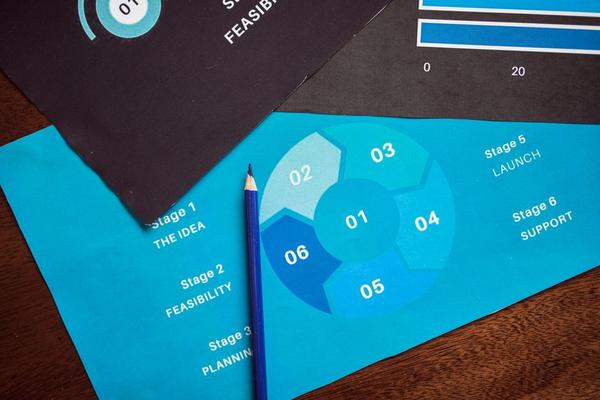
Every business begins somewhere, but not every founder starts with a polished idea or a five-year plan. Some notice a problem at work. Others try a side project and discover that strangers will pay for it. The entrepreneur journey stages help explain what happens next: exploring an opportunity, testing demand, launching, finding repeatable sales, building a team, and growing without losing control.
These stages are not a rigid ladder. A founder might launch quickly, return to customer research, or rebuild an offer after a disappointing first year. What matters is recognising the central question at each point. As the question changes, so should the founder’s priorities.
1. Curiosity: Spotting a Problem Worth Exploring
The startup journey often begins with an observation rather than an invention. Perhaps independent tradespeople waste hours arranging appointments, or local retailers struggle to photograph products consistently. Such frustrations are clues, not yet proof of a business opportunity.
Record who experiences the problem, how often it occurs, and what people currently do about it. There is a difference between an annoyance and a problem someone is motivated to solve. Before choosing a business model, ask potential customers about their existing behaviour. Avoid leading questions about whether they would buy your imagined solution.
2. Validation: Testing the Idea Before Committing
The next step in the entrepreneurship process is gathering evidence. Competitor research can reveal alternatives and typical pricing, but direct customer action is often more useful than enthusiastic feedback. A paid pilot, pre-order, or signed service agreement provides a stronger signal of demand than compliments alone.
Imagine someone considering a mobile bicycle-repair service. Rather than buying a van immediately, they offer weekend repairs in one neighbourhood. They track enquiries, confirmed bookings, average job value, travel time, parts costs, and referrals.
Five completed jobs at a price covering delivery costs may teach more than dozens of positive survey responses. If the economics fail, the founder can adjust the service area, customer group, or prices before committing further. A companion guide to business idea validation methods would be a useful next read.
3. Preparation: Making the Offer Deliverable
Once early evidence supports an idea, attention shifts to practical foundations: a clear offer, a way to accept payment, a reliable delivery process, and a basic financial picture. Depending on the industry and location, registration, permits, insurance, tax obligations, or data protection rules may also apply.
Identify what is included in the price, how much fulfilling an order costs, and when customers pay. Estimate sales needed to cover recurring expenses. A sale can appear profitable yet strain cash if suppliers must be paid weeks before customer payments arrive.
The goal is not to design a perfect company on paper. It is to remove obvious obstacles to serving real customers consistently.
4. Launch: Learning From Real Transactions
Launching makes the offer available to buy. It might mean opening a storefront, publishing a booking page, or contacting prospects. A launch starts the learning process; it does not settle whether the business will succeed.
Check whether customers understand the offer, can pay easily, and receive what was promised. Follow up after delivery to discover gaps between expectations and experience. One buyer might want an extra feature while another asks for a discount. Look for patterns among the customers you actually intend to serve instead of reacting to every suggestion.
5. Traction: Finding a Repeatable Way to Sell
Initial sales show that transactions are possible. Traction suggests the business can acquire and serve customers repeatedly under workable conditions. Among the entrepreneur journey stages, this transition is easy to misread: increasing revenue can hide thin margins or too much unpaid founder effort.
Monitor a small number of indicators, such as qualified enquiries, conversion rate, gross margin, repeat purchases, cancellations, and cash remaining. The right measures depend on the model. A subscription service might prioritise retention, while a project-based business tracks referrals and delivery capacity.
Return to the bicycle-repair example. If bookings rise only when the founder personally posts in community groups every evening, demand may exist, but sales are not yet repeatable. Partnerships with cycling clubs could be a worthwhile test. The related topic how to find your first customers offers further ways to compare acquisition channels.
6. Team Building: Moving Beyond Founder-Only Work
As orders increase, the founder’s time becomes a constraint. One person may handle sales, delivery, bookkeeping, and complaints, then wonder why progress has slowed. Hiring is one option; better systems, contractors, and delegation may come first.
Begin with recurring tasks that are easy to describe and evaluate. Document what success looks like, who makes decisions, and how exceptions are handled. The founder stages now shift from completing every task personally to helping others perform reliably. Hiring without clear responsibilities can multiply confusion rather than remove it.
7. Growth: Expanding Without Breaking What Works
Growth may mean serving more customers, entering another region, increasing capacity, or improving profits in an existing market. It does not automatically require rapid hiring or outside investment. The appropriate route depends on the business economics and the owner’s goals.
Before expanding, test whether margins, service quality, and cash flow hold up with higher volume. The mobile-repair company could add a second neighbourhood only after it understands travel costs, demand, and technician capacity in the first.
Different business growth stages demand different decisions. Earlier, the founder asks whether customers want the offer. Later, the question is whether the organisation can deliver it reliably at greater scale. A guide to small business growth strategies can help frame those expansion choices.
Why Moving Backward Is Sometimes Progress
New competitors, changing customer needs, or an expensive expansion can force an established company back into validation. Revisiting an earlier stage is not necessarily failure; it can be a sensible response to new evidence.
At a monthly review, ask: What have customers demonstrated? Which part of the business currently limits progress? What is the smallest useful test we can run next? These questions help distinguish a demand problem from a delivery or scaling problem.
Frequently Asked Questions
What are the main entrepreneur journey stages?
A practical framework is curiosity, validation, preparation, launch, traction, team building, and growth. The boundaries overlap, and businesses may revisit several stages.
How long does each stage take?
There is no universal timeline. A simple service may find paying customers within weeks; regulated or technically complex products often take longer. Evidence matters more than a calendar.
When should a founder start hiring?
Consider hiring when recurring work exceeds sustainable capacity and the business can afford the ongoing cost. Define the responsibilities and expected results first.
Can a business grow before it has strong traction?
Yes. Sales or customer numbers can rise before acquisition and delivery become repeatable. That growth may be fragile if margins, retention, or operational capacity are weak.
Conclusion
The entrepreneur journey is less about reaching a prestigious milestone than answering the right question at the right time. Explore problems before building, test willingness to pay before investing heavily, learn from launch, and develop repeatable operations before expanding. Knowing your current stage helps you work on the constraint that matters now rather than copying what a much larger company is doing.
